WHAT IS TAURINE?
Taurine is a sulfur-containing amino acid-like compound that is abundant in the human body, particularly in the heart, brain, retina, skeletal muscle, and immune cells. Although not incorporated into proteins, Taurine is classified as a conditionally essential amino acid due to its vital roles in maintaining cellular homeostasis, osmoregulation, antioxidant defense, calcium signaling, and membrane stabilization.
Taurine is synthesized in the liver from methionine and cysteine but may require supplementation in conditions of metabolic stress, disease, or aging. Intravenous (IV) administration of Taurine allows for rapid absorption and has gained interest in cardiovascular, neurological, metabolic, and wellness medicine.
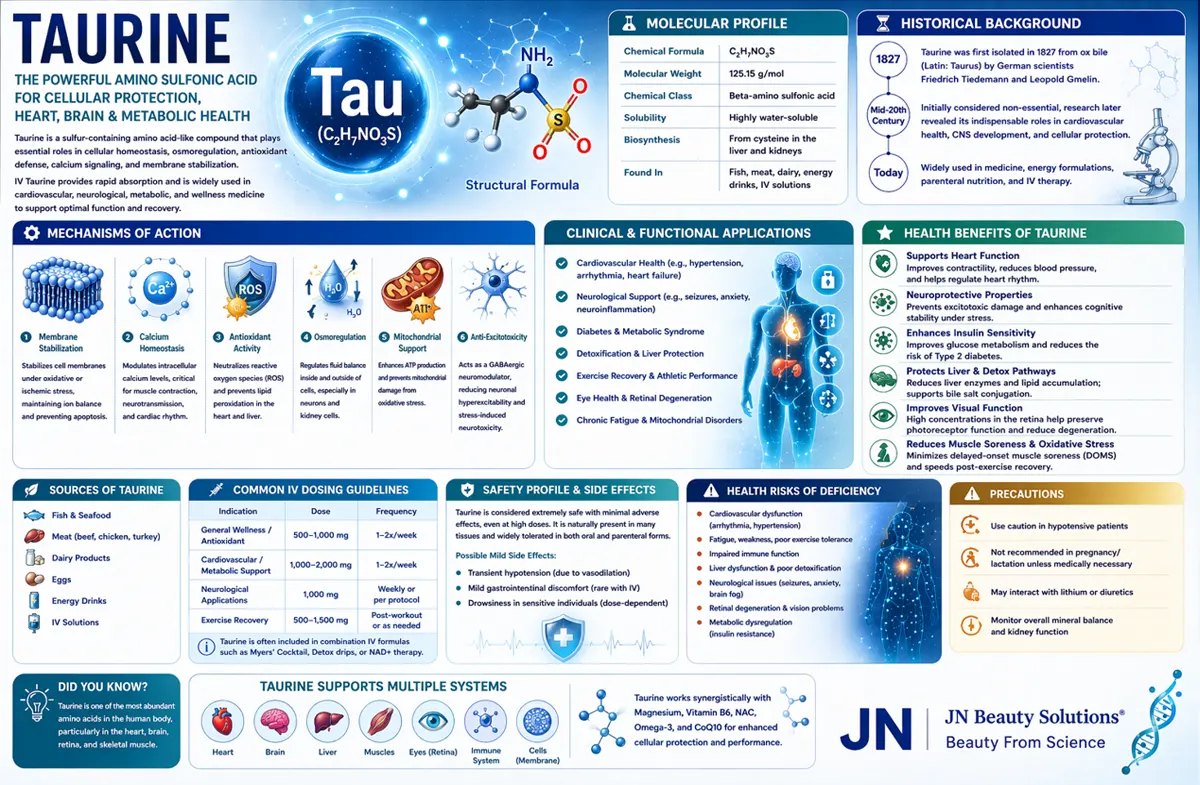
MOLECULAR PROFILE
- Chemical Formula: C₂H₇NO₃S
- Molecular Weight: 125.15 g/mol
- Chemical Class: Beta-amino sulfonic acid
- Solubility: Highly water-soluble
- Biosynthesis: From cysteine in the liver and kidneys
- Found In: Fish, meat, dairy, energy drinks, IV solutions
HISTORICAL BACKGROUND
Taurine was first isolated in 1827 from ox bile (Latin: Taurus) by German scientists Friedrich Tiedemann and Leopold Gmelin. Although initially considered non-essential, later research revealed its indispensable roles in cardiovascular health, central nervous system development, and cellular protection. It is now widely used in medicine, energy formulations, parenteral nutrition, and IV therapy.
MECHANISMS OF ACTION
Membrane Stabilization
Taurine stabilizes cell membranes under oxidative or ischemic stress, maintaining ion balance and preventing apoptosis.
Calcium Homeostasis
Modulates intracellular calcium levels, critical for muscle contraction, neurotransmission, and cardiac rhythm.
Antioxidant Activity
Neutralizes reactive oxygen species (ROS) and prevents lipid peroxidation, particularly in the heart and liver.
Osmoregulation
Regulates fluid balance inside and outside of cells, especially in neurons and kidney cells.
Mitochondrial Support
Enhances ATP production and prevents mitochondrial damage from oxidative stress.
Anti-Excitotoxicity
Acts as a GABAergic neuromodulator, reducing neuronal hyperexcitability and stress-induced neurotoxicity.
CLINICAL & FUNCTIONAL APPLICATIONS
Taurine has been extensively studied and used in various therapeutic and preventive health protocols, particularly through IV administration:
- Cardiovascular Health (e.g., hypertension, arrhythmia, heart failure)
- Neurological Support (e.g., seizures, anxiety, neuroinflammation)
- Diabetes & Metabolic Syndrome
- Detoxification & Liver Protection
- Exercise Recovery & Athletic Performance
- Eye Health & Retinal Degeneration
- Chronic Fatigue & Mitochondrial Disorders
HEALTH BENEFITS OF TAURINE
- Supports Heart Function
Improves contractility, reduces blood pressure, and helps regulate heart rhythm. - Neuroprotective Properties
Prevents excitotoxic damage and enhances cognitive stability under stress. - Enhances Insulin Sensitivity
Improves glucose metabolism and reduces the risk of Type 2 diabetes. - Protects Liver & Detox Pathways
Reduces liver enzymes and lipid accumulation; supports bile salt conjugation. - Improves Visual Function
High concentrations in the retina help preserve photoreceptor function and reduce degeneration.
Reduces Muscle Soreness & Oxidative Stress
Minimizes delayed-onset muscle soreness (DOMS) and speeds post-exercise recovery.
COMMON IV DOSING GUIDELINES
- General Wellness / Antioxidant: 500–1,000 mg | 1–2x/week
- Cardiovascular / Metabolic Support: 1,000–2,000 mg | 1–2x/week
- Neurological Applications: 1,000 mg | Weekly or per protocol
- Exercise Recovery: 500–1,500 mg | Post-workout or as needed
Taurine is often included in combination IV formulas such as Myers’ Cocktail, Detox drips, or NAD+ therapy.
SAFETY PROFILE & SIDE EFFECTS
Taurine is considered extremely safe with minimal adverse effects, even at high doses. It is naturally present in many tissues and widely tolerated in both oral and parenteral forms.
Possible Mild Side Effects:
- Transient hypotension (due to vasodilation)
- Mild gastrointestinal discomfort (rare with IV)
- Drowsiness in sensitive individuals (dose-dependent)
Precautions:
- Use caution in hypotensive patients
- Not recommended in pregnancy/lactation unless medically necessary
- May interact with lithium or diuretics
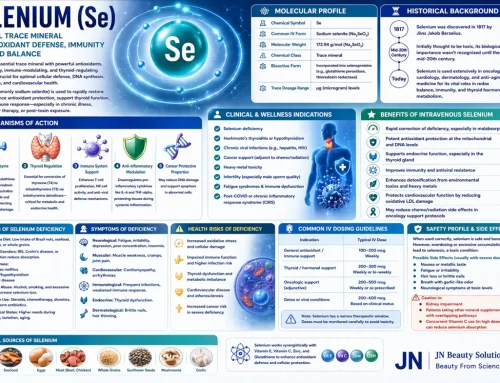
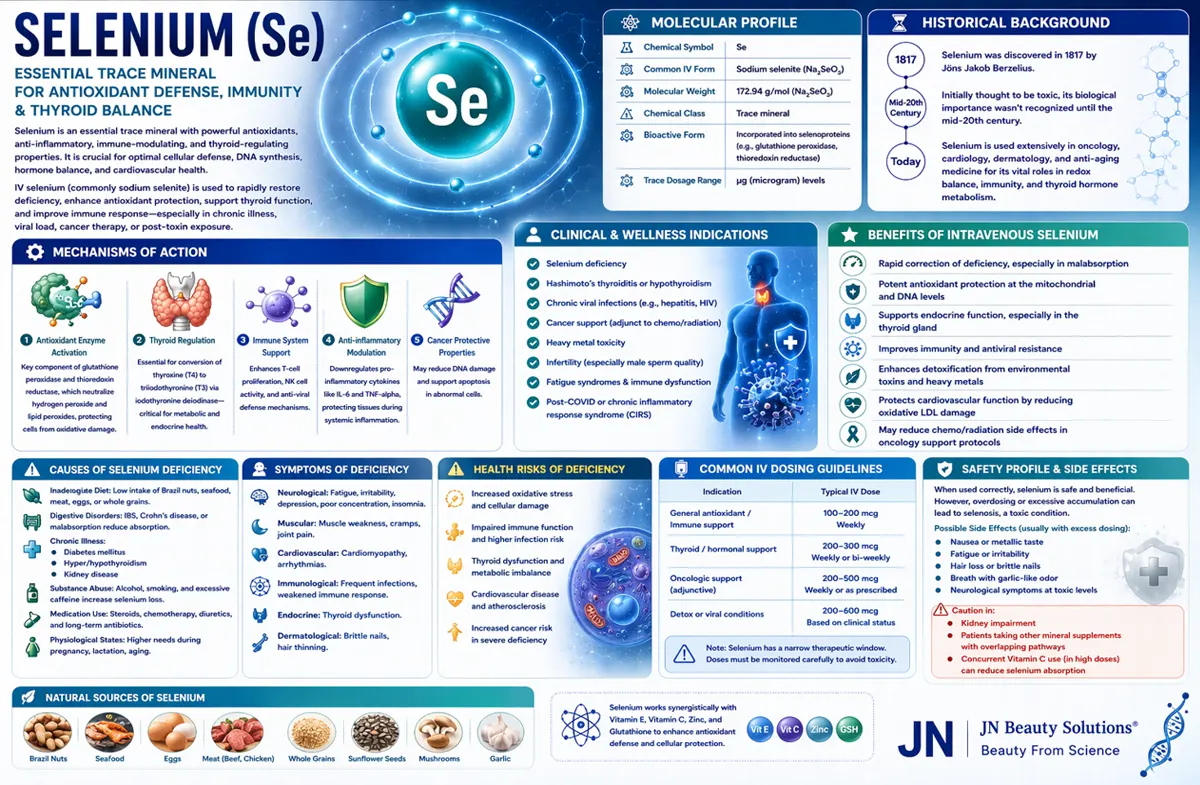
SYNERGISTIC IV COMBINATIONS
Detoxification & Liver Protection
Selenium + Glutathione + NAC: Triad for antioxidant detox pathways
Selenium + Alpha Lipoic Acid + Vitamin C: Combats oxidative inflammation and protects organs
Thyroid & Hormonal Optimization
Selenium + Zinc + Vitamin D3: Supports thyroid hormone conversion and immune-endocrine axis
Selenium + Magnesium + B6: Reduces Hashimoto’s inflammation and regulates TSH/T3 levels
Oncology & Immune Resilience
Selenium + CoQ10 + Curcumin: Mitochondrial protection and DNA repair
Selenium + IV Vitamin C (high dose): Antioxidant synergy with anti-tumor modulation
ADMINISTRATION NOTES
- Formulation: Sodium selenite IV solution (typically in saline or D5W)
- Infusion Time: 15–30 minutes depending on dose
- Light Protection: Yes, store in amber vials or protect during infusion
- Mixing Compatibility: Avoid combining with high-dose Vitamin C or reducing agents unless validated
CONCLUSION
Selenium (Selenese) is a trace mineral with outsize importance in human health. From cellular protection and immune balance to thyroid function and detoxification, selenium supports resilience across biological systems. Administered via IV, it provides rapid therapeutic levels ideal for individuals dealing with stress, toxicity, or chronic inflammation.
JN Beauty Solutions® uses pharmaceutical-grade selenium as part of our targeted IV antioxidant protocols, giving clients the foundation for immunity, longevity, and cellular health.
For more product information, please contact
JN BEAUTY SOLUTIONS®
Beauty From Science