
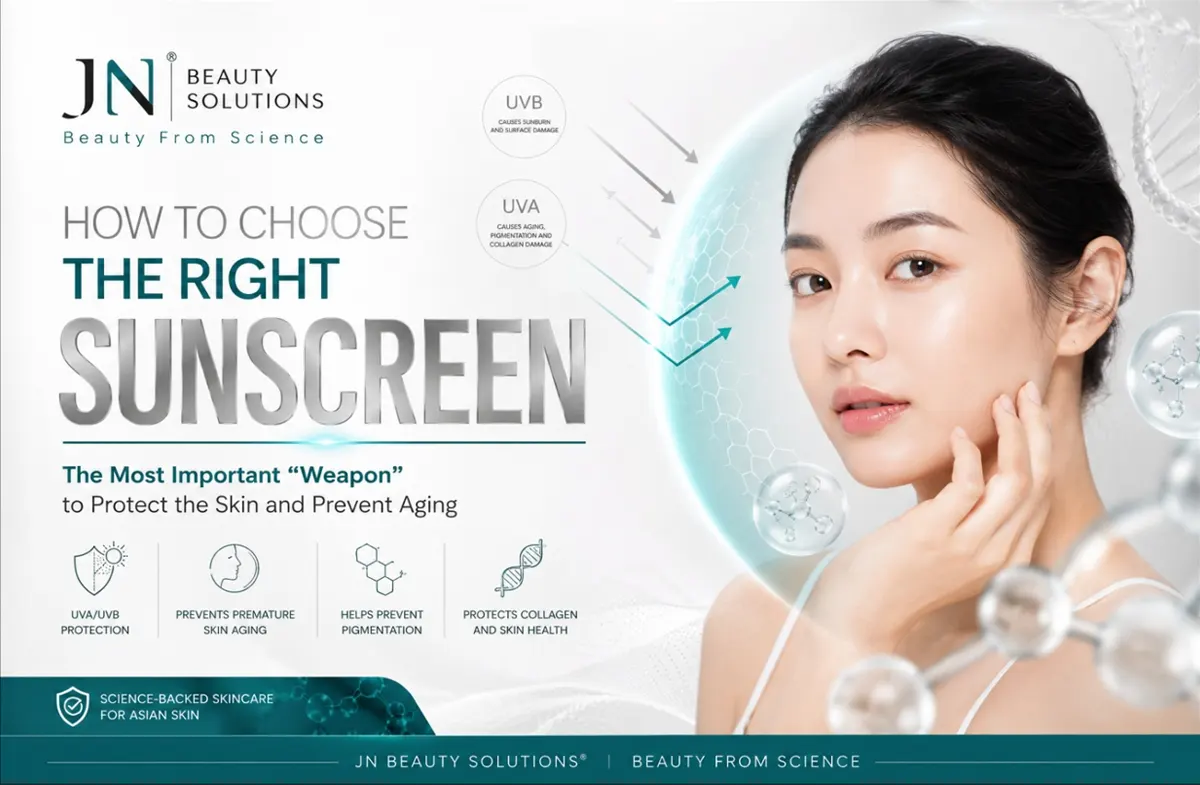
The Most Important “Weapon” to Protect the Skin and Prevent Aging
Sunscreen is not just a skincare product, but the most important foundational protection step in modern skincare. Many dermatological studies show that UV radiation and environmental light are the leading causes of most signs of premature aging such as melasma, hyperpigmentation, dark spots, dull skin, collagen loss, wrinkles, and even skin cancer.
For Asian skin — especially Vietnamese individuals with Fitzpatrick III–IV characteristics — the risk of post-inflammatory hyperpigmentation (PIH), melasma, and skin darkening is often higher than in Caucasian skin. Therefore, proper sun protection not only helps prevent sunburn but is also a long-term strategy to maintain healthy, even-toned, and youthful-looking skin.
In addition to UV rays, environmental pollution (PM2.5), high-energy visible light (HEV light), hot and humid temperatures, and oxidative stress also contribute to “environmental aging.” This is why choosing the right sunscreen and using it properly is becoming increasingly important in tropical Asian countries such as Vietnam.
Below is a scientific, practical, and Asian skin-friendly guide to help you choose the most effective sunscreen for yourself.
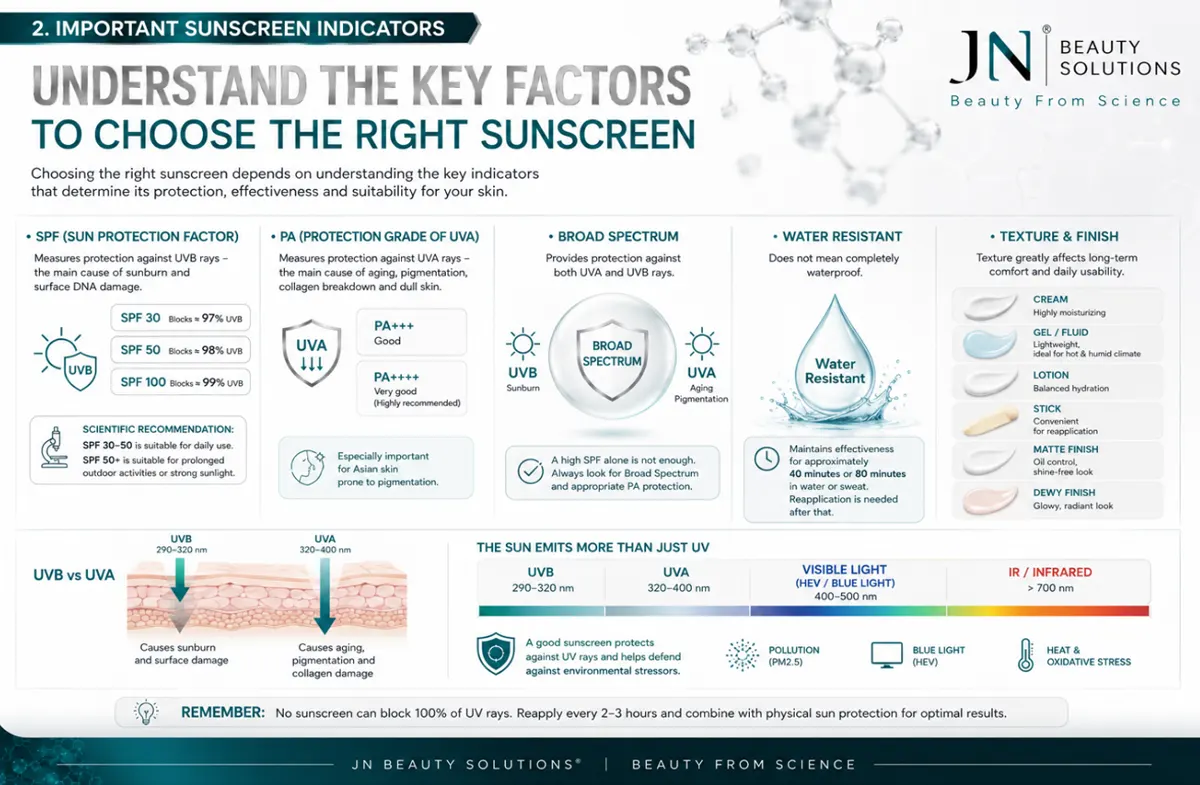
IMPORTANT INDICATORS YOU SHOULD UNDERSTAND
• SPF (Sun Protection Factor)
SPF measures the skin’s protection against UVB rays — the primary cause of sunburn and surface DNA damage.
- SPF 30: blocks approximately 97% of UVB rays
- SPF 50: blocks approximately 98% of UVB rays
- SPF 100: approximately 99% of UVB rays
The actual difference between SPF 50 and SPF 100 is not very significant. Extremely high SPF products are often thicker, more occlusive, and may cause users to become careless about reapplication.
Scientific Recommendation:
SPF 30–50 is suitable for daily use for most Asians. SPF 50+ is more appropriate for prolonged outdoor activities or strong sunlight exposure.
PA (Protection Grade of UVA)
PA measures protection against UVA rays — the main cause of premature aging, melasma, hyperpigmentation, collagen breakdown, and dull skin. For Asian skin that is prone to pigmentation, the PA rating is particularly important.
Recommendation:
PA+++: Good
PA++++: Very good and highly recommended
Broad Spectrum
“Broad Spectrum” means protection against both UVA and UVB rays. This is a very important standard that many people often overlook. A sunscreen with high SPF but without Broad Spectrum protection or appropriate PA rating may still lead to melasma and skin aging.
Water Resistant
Does not mean completely waterproof. “Water-resistant” sunscreen only maintains effectiveness for approximately: 40 minutes or 80 minutes under water or sweat. After that, reapplication is still necessary.
Texture & Finish
Texture greatly affects long-term usability:
- Cream: highly moisturizing
- Gel/Fluid: lightweight, suitable for hot and humid climates
- Lotion: balanced
- Stick: convenient for reapplication
- Matte finish: oil control
- Dewy finish: glowing and radiant appearance
Asians living in hot and humid climates generally prefer lighter textures compared to Western skin types.
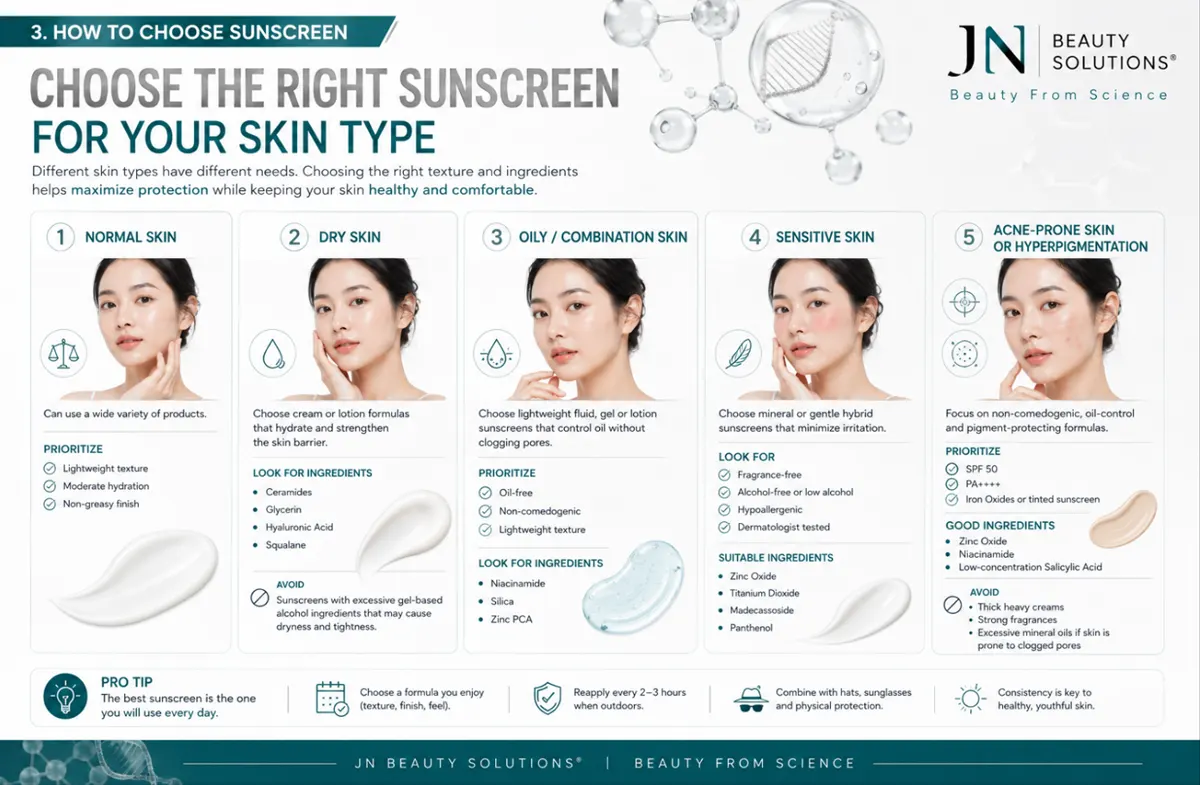
HOW TO CHOOSE SUNSCREEN FOR EACH SKIN TYPE
➤ Normal Skin
Can use a wide variety of products. Prioritize: Lightweight texture, Moderate hydration, non-greasy finish.
➤ Dry Skin
Choose cream or lotion formulas containing: Ceramides, Glycerin, Hyaluronic Acid, Squalane
Avoid:
Sunscreens with excessive gel-based alcohol ingredients that may cause dryness and tightness.
➤ Oily / Combination Skin
This is a very common skin type in Vietnam’s climate. Prioritize: Fluid, gel, or lightweight lotion sunscreens that are: Oil-free and non-comedogenic. Look for ingredients with mild oil-control properties such as: Niacinamide, Silica, Zinc PCA
➤ Sensitive Skin
Mineral or gentle hybrid sunscreens are recommended. Look for products with criteria such as: Fragrance-free, Alcohol-free or low alcohol, Hypoallergenic, Dermatologist tested.
Suitable ingredients include Zinc Oxide, Titanium Dioxide, Madecassoside, Panthenol
➤ Skin Prone to Melasma or Hyperpigmentation
This is a very common concern among Asians. Choose products with: SPF 50, PA++++, Iron oxides or tinted sunscreen. Because Iron Oxides help provide protection against blue light (HEV light), which may worsen pigmentation in Asian skin.
➤ Acne-Prone Skin
Prioritize sunscreens with: Oil-free, Non-comedogenic, Lightweight texture or non-occlusive formulas.
Look for products containing: Zinc Oxide, Niacinamide, Low-concentration Salicylic Acid
Avoid: Thick heavy creams, Strong fragrances
Excessive mineral oils if the skin is prone to clogged pores
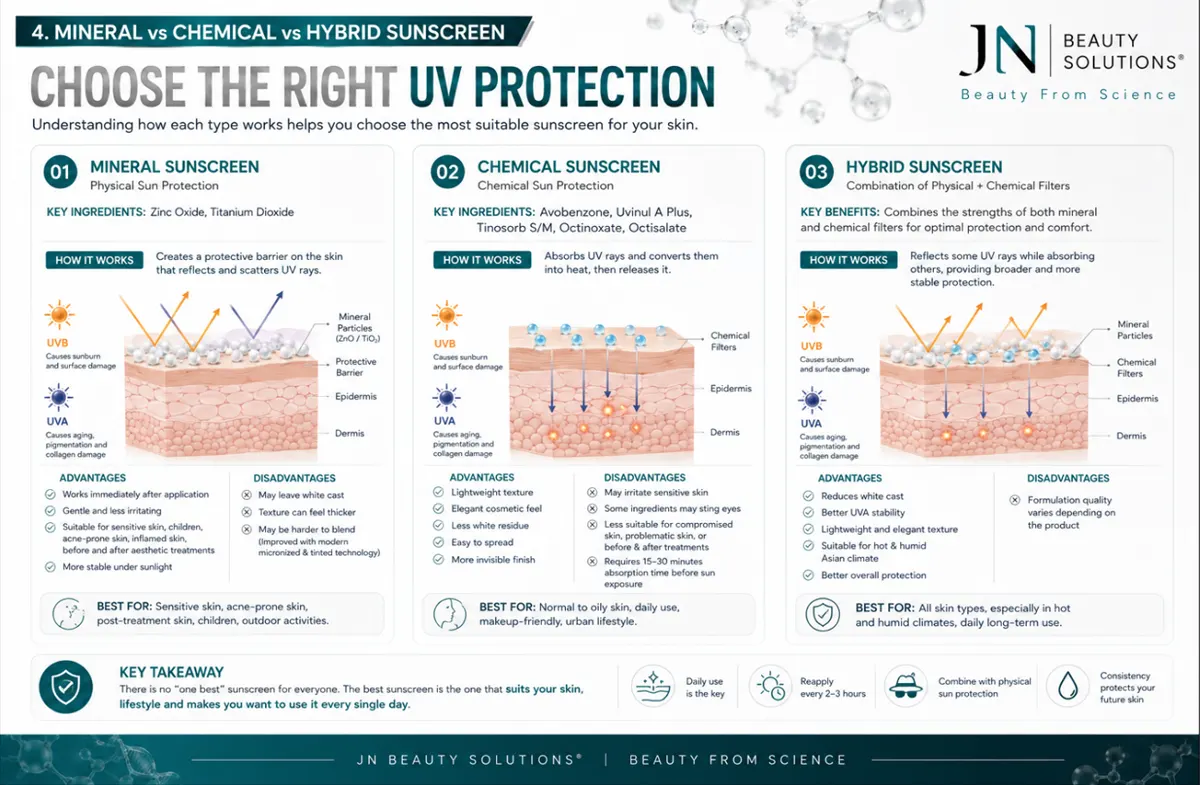
MINERAL OR CHEMICAL SUNSCREEN?
Mineral Sunscreen (Mineral Sunscreen or Sun Protection)
Common active ingredients include Zinc Oxide and Titanium Dioxide.
The mechanism of mineral sunscreen is to create a protective layer that reflects and scatters UV rays.
- Advantages:
Gentle, less irritating, suitable for sensitive skin, children, oily skin, inflamed skin, and skin before or after aesthetic treatments. - Disadvantages:
May leave a white cast and sometimes feel thicker in texture. However, modern micronized and tinted technologies have significantly improved the white-cast issue on Asian skin.
Chemical Sunscreen
Common active ingredients include Avobenzone, Uvinul A Plus, Tinosorb S/M, Octinoxate, Octisalate.
The mechanism of chemical sunscreen is to absorb UV rays and convert them into heat.
- Advantages:
Lightweight, Elegant cosmetic finish, less white residue. - Disadvantages:
May irritate sensitive skin, some ingredients may sting the eyes, and may not be suitable for compromised skin, problematic skin, or skin before and after treatments.
Hybrid Sunscreen
This type combines both mineral and chemical filters. It is currently a popular trend because it reduces white cast, improves UVA stability, provides a more elegant texture, better suits hot and humid Asian climates.
IMPORTANT CRITERIA WHEN BUYING SUNSCREEN
- Prioritize Broad Spectrum + SPF 30–50 + PA+++/PA++++
- Choose a texture suitable for hot and humid climates
- Check expiration date and sealed packaging
- Prioritize dermatologist-tested brands
- Perform a patch test if you have sensitive skin by testing on the wrist or behind the ear for 48–72 hours
Proper Amount
Most people do not apply enough sunscreen.
Usage Recommendation:
Approximately: 2 mg/cm² of skin
Equivalent to two finger lengths for the face and neck
COMMON MISTAKES WHEN USING SUNSCREEN
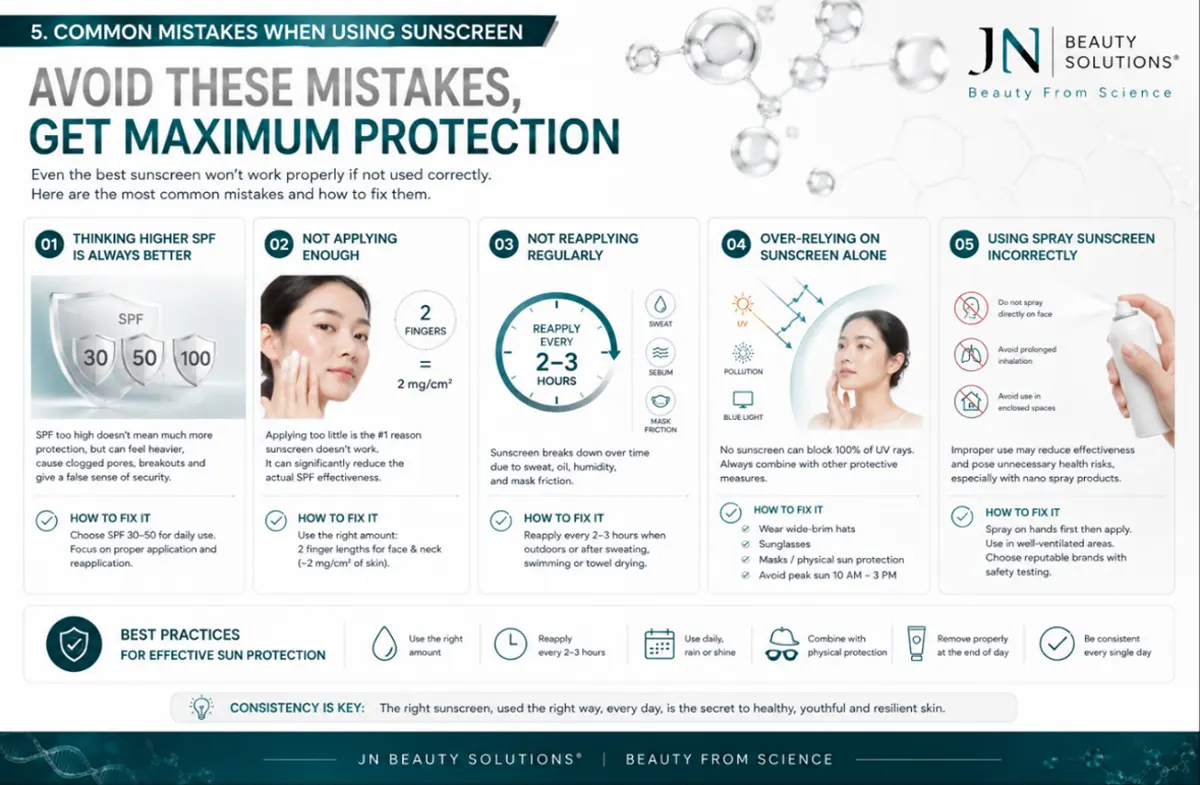
Believing Higher SPF Is Always Better
This is a very common misconception.
- Very high SPF does not necessarily mean dramatically better protection but may:
- Feel heavier
- Be harder to spread
- Cause acne breakouts more easily
- Feel uncomfortable in hot and humid climates
Not Applying Enough
This is the most common reason sunscreen becomes “ineffective.”
Applying too thinly can significantly reduce the actual SPF performance.
Not Reapplying
Sunscreen effectiveness decreases over time due to: Sweat, Sebum, Mask friction,
Reapplication every 2–3 hours is recommended during outdoor activities.
Over-Relying on Sunscreen
- No product can block 100% of UV rays.
- Additional protective measures should include:
- Wide-brimmed hats
- Sunglasses
- Masks/physical sun protection
- Avoiding intense sun exposure from 10 AM–3 PM
Incorrect Use of Spray Sunscreen
Spray sunscreens are convenient but require caution:
- Do not spray directly onto the face
- Avoid prolonged inhalation of aerosols
- Avoid use in enclosed spaces
Especially with nano spray products, choose reputable brands with clear safety testing.
SPECIAL CONSIDERATIONS FOR ASIAN SKIN
Asian skin is generally more prone to hyperpigmentation compared to other ethnic groups, more susceptible to post-inflammatory hyperpigmentation (PIH), and more likely to develop yellowish dullness caused by UV exposure and pollution. Therefore, proper UVA protection is extremely important, and PA+++ to PA++++ should be prioritized.
Choosing mineral sunscreens with tinted sunscreen formulations containing Iron Oxides is often more suitable for melasma-prone skin. Lightweight textures also improve long-term compliance in hot and humid climates.
In real clinical practice, a sunscreen that is “comfortable enough for daily use” is often more effective than an extremely high-SPF product that feels unpleasant and causes users to stop using it.
CONCLUSION
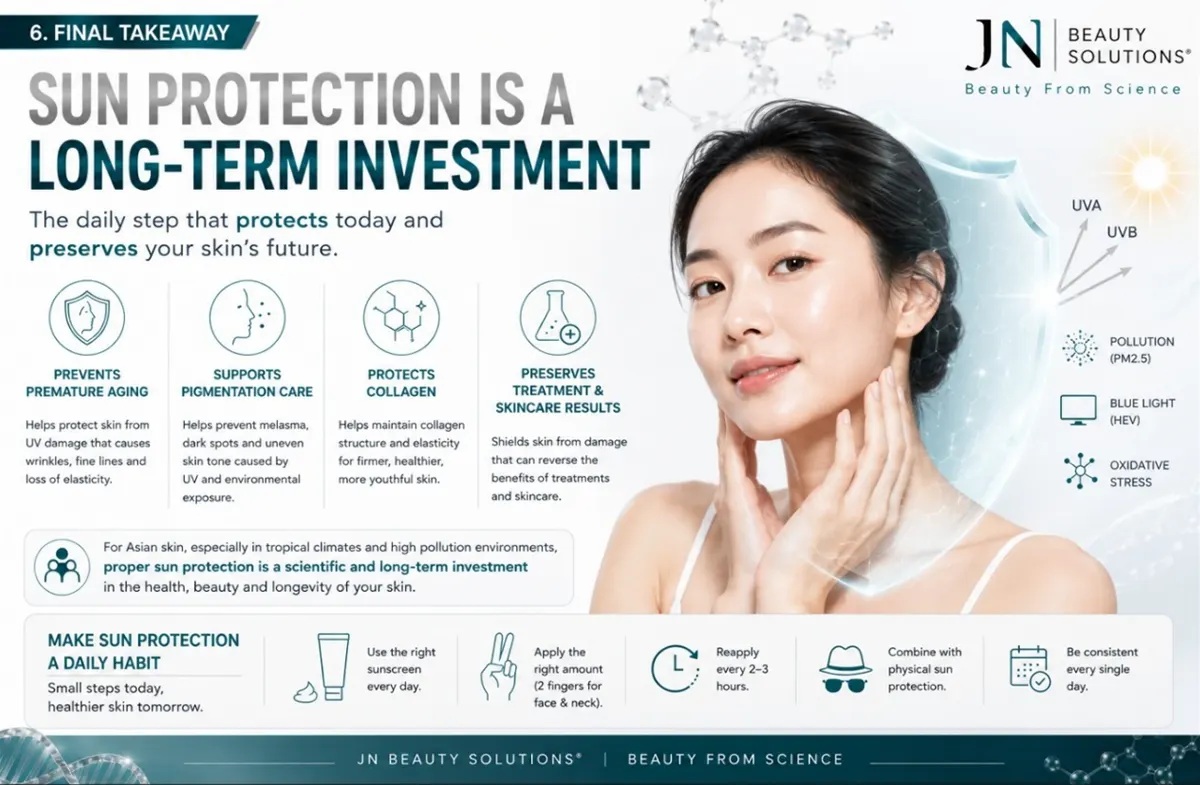
Sunscreen/Sun Protection is not an instant skin-whitening product, but rather a “protective barrier” that helps:
- Prevent premature aging
- Support prevention of melasma and hyperpigmentation
- Reduce collagen damage
- Protect long-term treatment and skincare results
A product that matches your skin type, climate, and lifestyle habits will help maintain healthier, more stable, and more youthful skin over time.
For Asian skin, especially in tropical climates and highly polluted environments, proper sun protection should be considered a long-term scientific investment in skin health.
JN Beauty Solutions®
Beauty From Science