
Hyperpigmentation is a skin condition characterized by brown spots, uneven dark patches, or melasma caused by increased melanin production and irregular melanin distribution. It is especially common in Asian skin, as this skin type tends to react strongly to UV radiation, inflammation, heat, and environmental triggers.
Melasma is a chronic pigmentation disorder that commonly appears as symmetrical brown or gray-brown patches on the cheeks, forehead, chin, or upper lip. Although not dangerous to overall health, melasma is often difficult to completely eliminate and can easily recur if the underlying causes are not properly controlled and the skin is not managed correctly.
One important concept to understand is that melasma management is not simply about achieving lighter skin tone. Effective long-term management requires a combination of inflammation control, skin barrier protection, melanin regulation, and strict photoprotection.
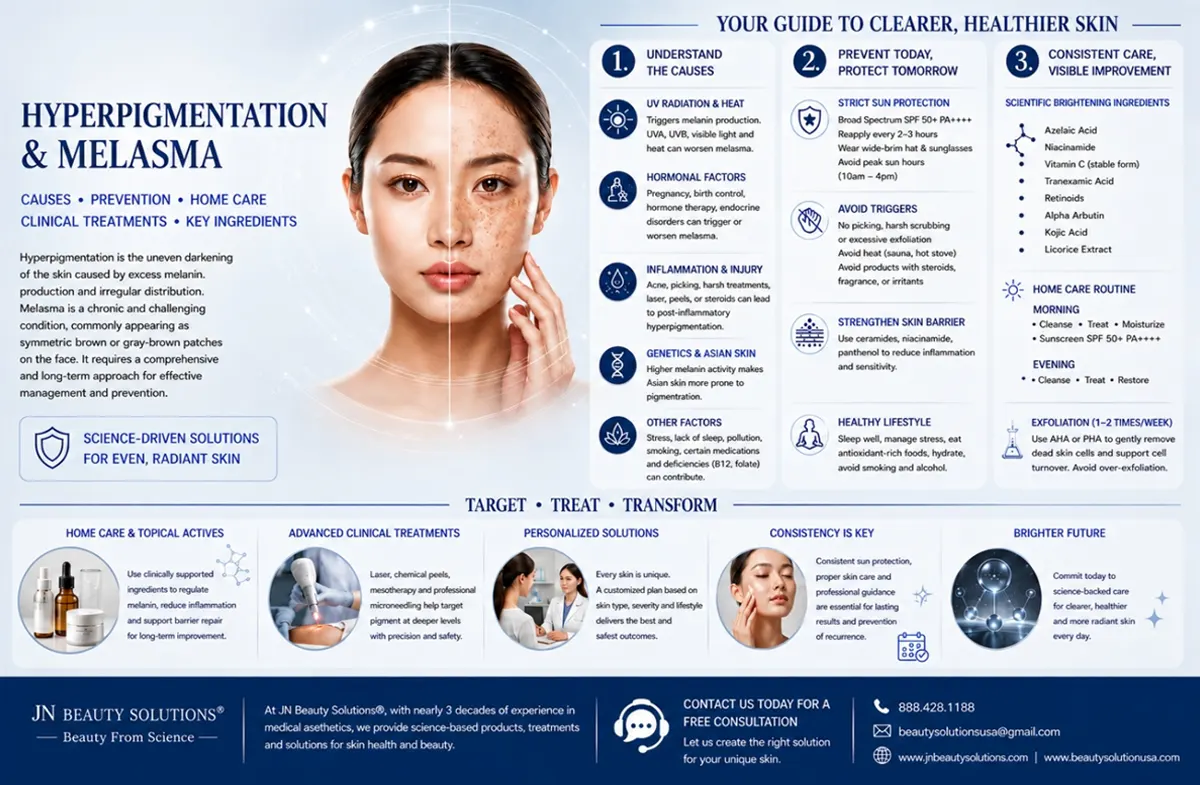
MAIN CAUSES OF HYPERPIGMENTATION & MELASMA
UV RADIATION & HEAT
This is the most important trigger. UVA, UVB, and environmental heat can stimulate melanocytes to overproduce melanin. In addition, visible light and high-energy blue light may worsen melasma in certain individuals.
HORMONES & ENDOCRINE IMBALANCE
Hormones play a major role in melasma, especially in women:
Pregnancy (“mask of pregnancy”)
Birth control pills
Hormone therapy
Hormonal fluctuations can make melanocytes more sensitive to UV exposure and inflammation.
INFLAMMATION & SKIN DAMAGE
Post-Inflammatory Hyperpigmentation (PIH) commonly occurs after:
Inflammatory acne
Picking or squeezing acne
Aggressive laser or peel treatments
Chronic irritation
Misuse of corticosteroid-containing creams
Asian skin is particularly prone to PIH when treatments are too aggressive or when barrier recovery is inadequate.
GENETICS & ASIAN SKIN CHARACTERISTICS
Asian skin generally has higher melanocyte activity, making it more susceptible to pigmentation after exposure to UV light, heat, or inflammation.
OTHER CONTRIBUTING FACTORS
Several additional factors may worsen melasma:
- Aging and chronic oxidative stress
- Long-term stress
- Sleep deprivation
- Environmental pollution
- Smoking
- Certain medications such as Tetracycline or Phenytoin
- Deficiencies in Vitamin E, B12, or Folate in some cases
EFFECTIVE PREVENTION STRATEGIES
STRICT PHOTOPROTECTION
This is the single most important step in melasma treatment and recurrence prevention.
Recommendations:
- Broad Spectrum SPF 30–50+ PA++++ sunscreen
- Apply sufficient amount and reapply every 2–3 hours outdoors
- Use wide-brim hats and sunglasses
- Limit excessive sun exposure
- Prefer sunscreens containing iron oxides if visible-light-induced melasma is suspected
Many melasma treatment failures are not caused by weak technology, but rather by inadequate photoprotection after treatment.
REDUCING IRRITATION & INFLAMMATION
Avoid harsh scrubbing or over-exfoliation
Do not overuse high-strength acids or retinoids
Avoid excessive heat exposure such as saunas or hot kitchen environments
Avoid long-term misuse of steroid-containing creams
SUPPORTING THE SKIN BARRIER
A healthy skin barrier helps reduce inflammation and lowers the risk of pigmentation recurrence.
Recommended supportive ingredients: Ceramides, Niacinamide, Panthenol, Cholesterol & Fatty Acids, Peptides, Growth Factors or Stem Cell-Derived Conditioned Media.
LIFESTYLE OPTIMIZATION
Sleep adequately
Reduce chronic stress
Consume antioxidant-rich vegetables and fruits
Stay hydrated
Limit smoking and alcohol consumption
HOME CARE APPROACHES
Priority scientifically supports brightening and pigmentation-regulating ingredients.
Azelaic Acid
Benefits:
- Anti-inflammatory
- Helps inhibit tyrosinase activity
- Supports improvement of PIH and mild-to-moderate melasma
- Suitable for sensitive or redness-prone skin
Azelaic Acid is considered relatively safe for Asian skin and carries a lower risk of rebound pigmentation compared to many stronger depigmenting agents.
Niacinamide
Benefits:
- Helps reduce melanin transfer to the skin surface
- Supports skin barrier recovery
- Helps reduce mild inflammation and oxidative stress
- Improves uneven skin tone
Niacinamide is commonly combined with Vitamin C, Tranexamic Acid, or Alpha Arbutin for enhanced brightening support.
Stabilized Vitamin C
Benefits:
- Powerful antioxidant support
- Helps reduce UV-induced oxidative stress
- Supports melanin-regulating pathways
- Improves skin brightness and radiance
Stabilized derivatives are often better tolerated by sensitive skin than high-concentration L-Ascorbic Acid.
Tranexamic Acid
Tranexamic Acid has been extensively studied for melasma, especially hormonally related melasma. Potential benefits:
- Helps reduce melanocyte activation
- Helps reduce vascular inflammation associated with melasma
- May help reduce recurrence in certain individuals
Can be used as: Topical 2–5% or Mesotherapy. Oral form under physician supervision
Retinoids
Benefits:
- Increase cellular turnover
- Help disperse melanin
- Improve skin texture
However, retinoids should be introduced gradually to minimize irritation and rebound pigmentation risk.
BASIC ROUTINE FOR MELASMA & HYPERPIGMENTATION
Morning Routine
Gentle cleanser
Niacinamide or Stabilized Vitamin C or Alpha Arbutin
Barrier-support serum
Lightweight moisturizer
SPF 30–50+ PA++++ sunscreen
Evening Routine
Makeup remover if wearing sunscreen or makeup
Gentle cleanser
Azelaic Acid or mild Retinoid
Barrier-repair moisturizer
Gentle exfoliation
Mild AHA or PHA exfoliation may be used 1–2 times weekly to help remove pigmented dead skin cells. Excessive peeling should be avoided because it may trigger inflammation and rebound pigmentation.
NATURAL METHODS & HOME DEVICES
Proper Skin Care Habits
Use topical products according to professional recommendations
Do not forget sunscreen even indoors, as UVA, UVB, and heat may still affect the skin
Use gentle skin scrubs or scrub gels
Cleanse the skin regularly and appropriately
Massage & Gua Sha
Gentle massage or Gua Sha may help support circulation and muscle relaxation, but there is currently limited evidence supporting direct melasma improvement.
At-Home Microneedling
Extreme caution is necessary because: Infection risk exists, Inflammation can occur easily
Improper or non-sterile techniques may worsen PIH. Asian skin should avoid excessive at-home microneedling.
ADVANCED CLINICAL TREATMENTS
Laser & Light-Based Treatments:
Commonly used technologies include:
- Q-switched Nd: YAG toning
- Pico laser
- IPL in selected cases
Laser treatments may help improve pigmentation, but melasma should generally be considered a chronic and relapsing condition requiring long-term management. Overly aggressive treatment or improper settings for Asian skin may increase the risk of rebound pigmentation.
Chemical Peels:
Commonly used peels include:
- Jessner Peel
- Mandelic Acid
- Salicylic Acid
- Kojic Acid Peel
Peels should always be individualized according to skin type and sensitivity.
Professional Mesotherapy & Microneedling
These approaches may help deliver ingredients such as:
- Tranexamic Acid
- Vitamin C
- Peptides
- Glutathione
Results depend heavily on technique, inflammation control, and post-treatment recovery.
Prescription Medications
Hydroquinone is a potent depigmenting ingredient, but should only be used short-term
- Requires physician supervision
- Should not be overused because of the risk of ochronotic and skin thinning
Triple Combination Therapy commonly includes: Hydroquinone/ Tretinoin/ Mild corticosteroid
This remains a classic melasma protocol but is not appropriate for unsupervised long-term use.
Oral Tranexamic Acid may help certain hormonally related melasma cases, but thrombotic risk and medical history must be evaluated first.
IV ANTIOXIDANT & SKIN BRIGHTENING SUPPORT THERAPY
In certain modern aesthetic models, IV antioxidant support therapies are used as adjunctive approaches to support skin health, reduce oxidative stress, and improve overall skin radiance in individuals with hyperpigmentation or melasma.
Commonly combined ingredients include:
- Glutathione
- Vitamin C
- Nicotinamide (Vitamin B3)
- Glycine
- GHK-Cu Peptide
- Thioctic Acid (Alpha Lipoic Acid)
- Biotin
- Supportive B-complex vitamins and minerals
These protocols are often explored for their potential to:
- Help reduce UV- and inflammation-related oxidative stress
- Support endogenous antioxidant systems
- Support improvement in dull and uneven skin tone
- Support post-treatment skin recovery
- Support skin barrier health and cellular metabolism
Potential Roles of Key Ingredients
Glutathione
An important endogenous antioxidant commonly used in antioxidant-support and skin-brightening protocols. Potential roles:
- Helps neutralize free radicals
- Supports reduction of UV-related oxidative stress
- Supports improvement in overall skin brightness and tone uniformity
- Supports antioxidant balance associated with melanin regulation
Vitamin C
Benefits:
- Strong antioxidant support
- Helps regenerate active Glutathione
- Supports environmental skin protection
- Supports collagen synthesis and skin recovery
Vitamin C is commonly combined with Glutathione for broader antioxidant support.
Nicotinamide (Vitamin B3)
Nicotinamide is an important precursor in the NAD⁺ pathway.
- Potential supportive roles:
- Supports cellular energy metabolism
- Supports skin barrier recovery
- Helps reduce mild inflammation
- Supports overall skin tone and skin health
Glycine
Glycine is an amino acid precursor involved in endogenous Glutathione synthesis. Potential supportive roles:
- Supports the body’s natural antioxidant defense
- Supports collagen and tissue recovery
- Supports cellular detoxification processes
GHK-Cu Peptide
GHK-Cu has been studied for:
- Tissue regeneration support
- Anti-inflammatory support
- Post-treatment skin recovery
- Improvement in skin quality and wound-healing processes
Thioctic Acid (Alpha Lipoic Acid)
A versatile antioxidant active in both water and lipid environments. Potential supportive roles:
- Supports endogenous antioxidant recycling networks
- Helps reduce oxidative stress
- Supports cellular protection against environmental damage
- Helps regenerate Vitamin C and Glutathione
Biotin
Biotin supports:
- Skin and Hair Health
- Cellular metabolism
- Enzyme activity related to energy metabolism
Important Notes
It is important to understand:
- IV therapy is considered supportive, not a replacement for standard melasma treatment
- Results may vary depending on skin type and underlying causes
- Not all Melasma cases respond clearly to IV therapy
- Treatments should be performed in appropriate professional settings using qualified products
In clinical practice, antioxidant-support protocols often perform better when combined with:
- Strict photoprotection
- Proper home skincare
- Inflammation control
- Appropriate laser or peel treatments
- Long-term barrier repair support
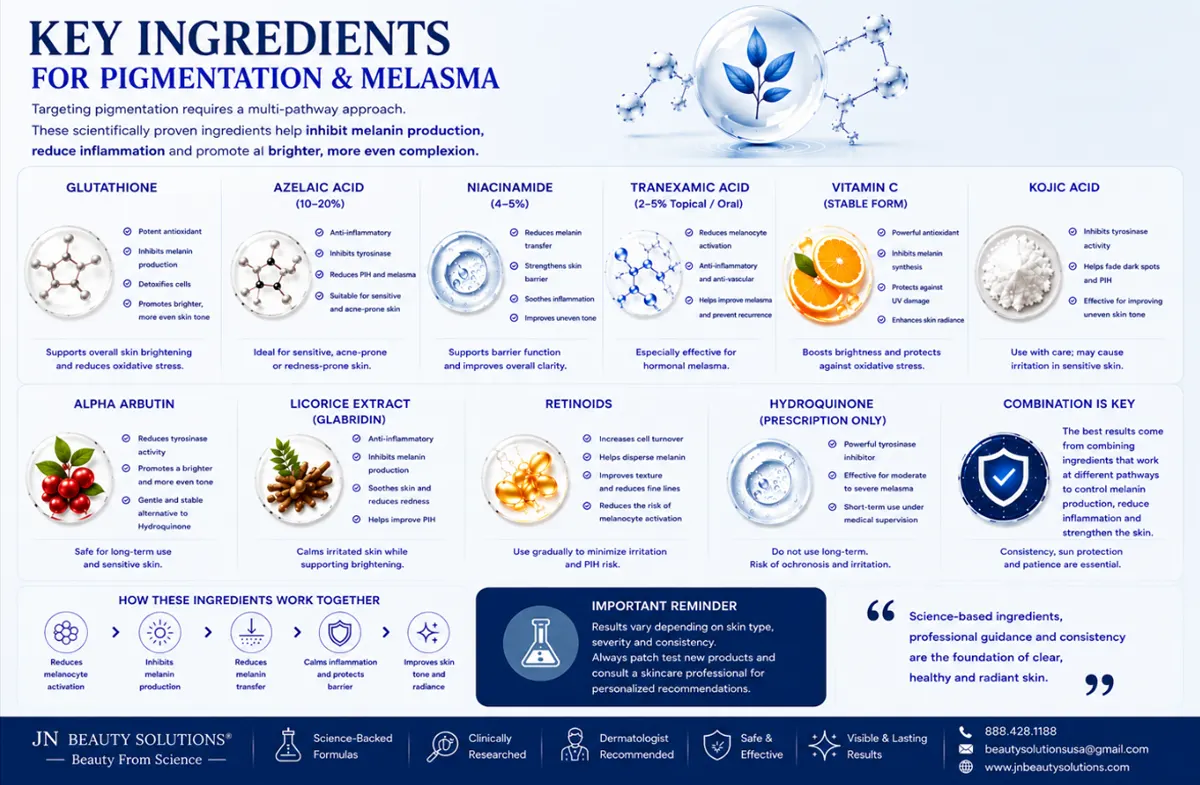
KEY INGREDIENTS FOR HYPERPIGMENTATION & MELASMA
Azelaic Acid (10–20%)
Potential benefits:
- Anti-inflammatory
- Tyrosinase inhibition support
- Helps improve PIH and mild-to-moderate melasma
- Suitable for sensitive or redness-prone skin
Azelaic Acid is considered relatively safe for Asian skin and less likely to cause rebound pigmentation.
Niacinamide (4–5%)
Benefits:
- Helps reduce melanin transfer
- Supports skin barrier recovery
- Helps reduce mild inflammation and oxidative stress
- Improves uneven skin tone
Niacinamide is commonly combined with Vitamin C, Tranexamic Acid, or Alpha Arbutin for enhanced brightening support.
Tranexamic Acid
Potential benefits:
- Helps reduce melanocyte activation
- Helps reduce vascular inflammation associated with melasma
- May help reduce melasma recurrence
Can be used topically, via mesotherapy, or orally under professional supervision.
Stabilized Vitamin C
Benefits:
- Powerful antioxidant support
- Helps reduce UV-induced oxidative stress
- Supports brighter and more even skin tone
- Helps reduce free radical damage
- Stabilized derivatives are often better tolerated by sensitive skin.
Kojic Acid
Benefits:
- Helps inhibit tyrosinase activity
- Helps improve dark spots and PIH
- Enhances brightening effects when combined with other ingredients
However, Kojic Acid may irritate sensitive skin if used excessively.
Alpha Arbutin
Alpha Arbutin is a widely used pigmentation-support ingredient in modern skincare.
Potential benefits:
- Helps reduce tyrosinase activity
- Supports gradual skin brightening
- Less irritating than Hydroquinone
Often combined with:
- Niacinamide
- Vitamin C
- Tranexamic Acid
- Kojic Acid
- Aloe Vera Gel
Licorice Extract
Licorice Extract contains Glabridin and flavonoids that may:
- Help reduce inflammation
- Help inhibit melanin formation
- Soothe the skin
- Help improve post-inflammatory redness
- Suitable for:
- Sensitive skin
- Easily irritated skin
- Mild PIH-prone skin
Glutathione
Glutathione is an important endogenous antioxidant explored in antioxidant-support and skin-brightening protocols. Potential roles:
- Supports reduction of UV-related oxidative stress
- Supports antioxidant balance associated with melanin regulation
- Supports improvement in overall skin brightness and tone uniformity
- Supports recovery after inflammation or treatments
Glutathione is often combined with Vitamin C or/and Glycine, Alpha Lipoic Acid, Niacinamide (B3)
GHK-Cu Peptide. However, skin-brightening outcomes may vary depending on individual biology, dosage, and duration of use. It should not be considered an instant whitening solution as often exaggerated in marketing.
Retinoids
Benefits:
- Increase cell turnover
- Support melanin dispersion
- Improve texture and signs of aging
Retinoids should be introduced gradually to minimize irritation and PIH risk in Asian skin.
Hydroquinone (Prescription Use)
Hydroquinone is a potent tyrosinase inhibitor commonly used for moderate-to-severe melasma.
However:
- It is not suitable for all skin types
- Requires professional supervision
- Should only be used for the short-term
- Long-term misuse may increase the risk of Ochronosis and skin thinning
Many professionals now prefer combining gentler ingredients for more sustainable pigmentation management and lower rebound risk.
JN BEAUTY SOLUTIONS® RECOMMENDED HOME CARE PRODUCTS
Cleansers
- Active Brightening Gel Cleanser
- REJU MAXX Cleanser
Serums
- Diamond Bright Brightening Serum
- Skin Repair Serum
- REJU Rejuvenating Serum
- High Potency Hyaluronic Acid
Creams
- Diamond Bright Night Gel
- Illuminating Brightening Cream
- Cellogenics Cream
- Revitalizing Moisturizer by Peptides
Scrubs / Exfoliators
- Skin Scrub
- REJU Dermabrasion Cream
- Herbal Peeling Gel
Masque
- Collagen Treatment Masque
- REJU Mineral Masque
Sun Care
- Whitening Day Cream SPF 50
- Sun Protection SPF 30
Important Notes
- Product recommendations should always be personalized according to skin type and current skin condition.
- Depending on budget considerations, some products may be reduced; however, for hyperpigmentation and melasma, Night Gel + Diamond Bright Brightening Serum + Illuminating Brightening Cream are considered essential core products.
- Physical or hybrid sunscreens are often preferred for sensitive or melasma-prone skin during pigmentation-management protocols.
- Product layering may vary depending on skin condition; however, basic skincare routine principles are still recommended, such as water-based products before oils, lower pH before higher pH, and serum before cream.
- JN Beauty Solutions® products are developed within a cosmeceutical-oriented skincare approach and should ideally be recommended with professional consultation.
CONCLUSION
Hyperpigmentation and melasma are chronic skin conditions that require a scientific, long-term, and personalized approach. In most cases, successful results do not come from a single product or technology, but rather from the proper combination of:
- Strict photoprotection
- Inflammation control
- Skin barrier repair
- Appropriate brightening ingredients
- Properly indicated advanced treatments when necessary
The most important factors are consistency, strategic treatment planning, and avoiding “rapid whitening” methods or excessively aggressive treatments that may weaken the skin and increase long-term pigmentation recurrence risk.
JN Beauty Solutions® brings nearly three decades of experience in skin aesthetics, offering science-based products, treatment protocols, and advanced skincare solutions designed to support healthier skin through safe, modern, and personalized approaches.
Contact us today for a free consultation and discover the most suitable solution for your skin.
JN Beauty Solutions®
Beauty From Science