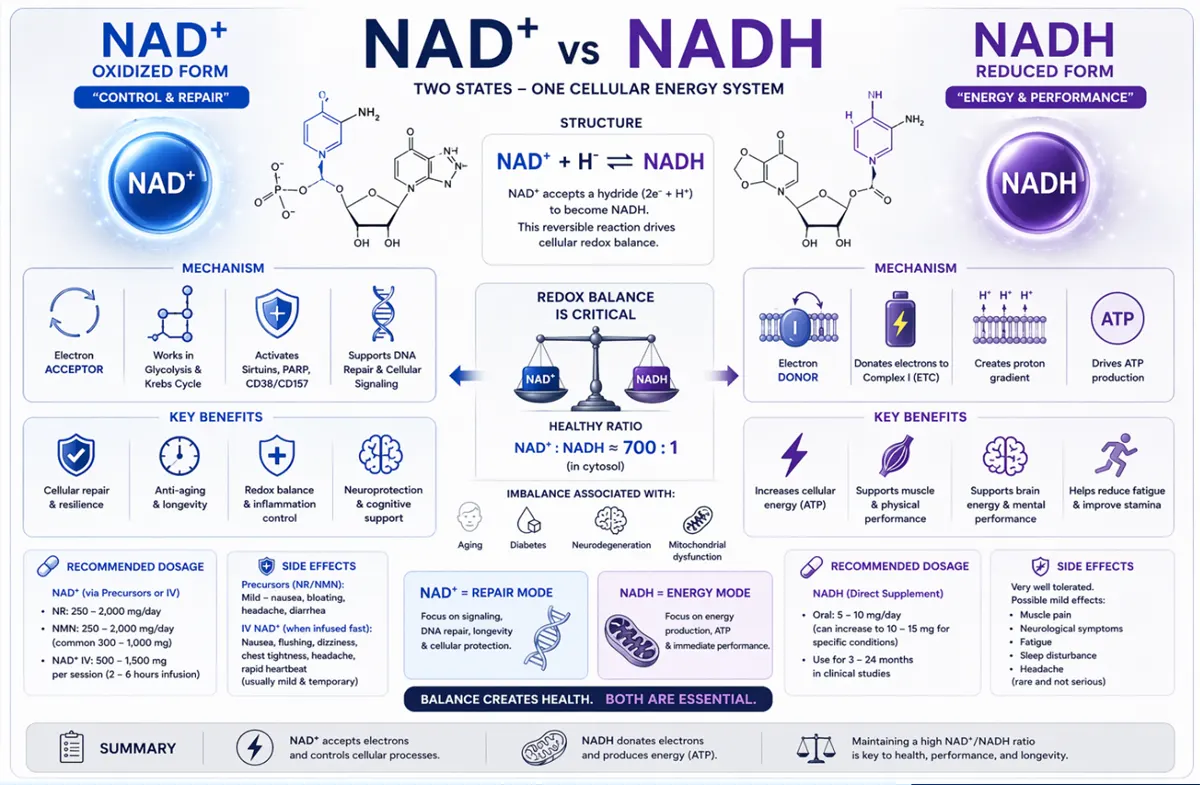
INTRODUCTION NAD (Nicotinamide Adenine Dinucleotide) is an important coenzyme that exists in two main forms: NAD+ (oxidized form) and NADH (reduced form). They play a central role in cellular energy metabolism, redox balance, DNA repair, inflammation control, and anti-aging. The differences between NAD+ and NADH are not only in their chemical structure but also clearly reflected in their mechanisms of action, supplementation applications, dosage, and side effects. This report synthesizes biochemical studies, clinical trials, and systematic reviews to clarify[...]
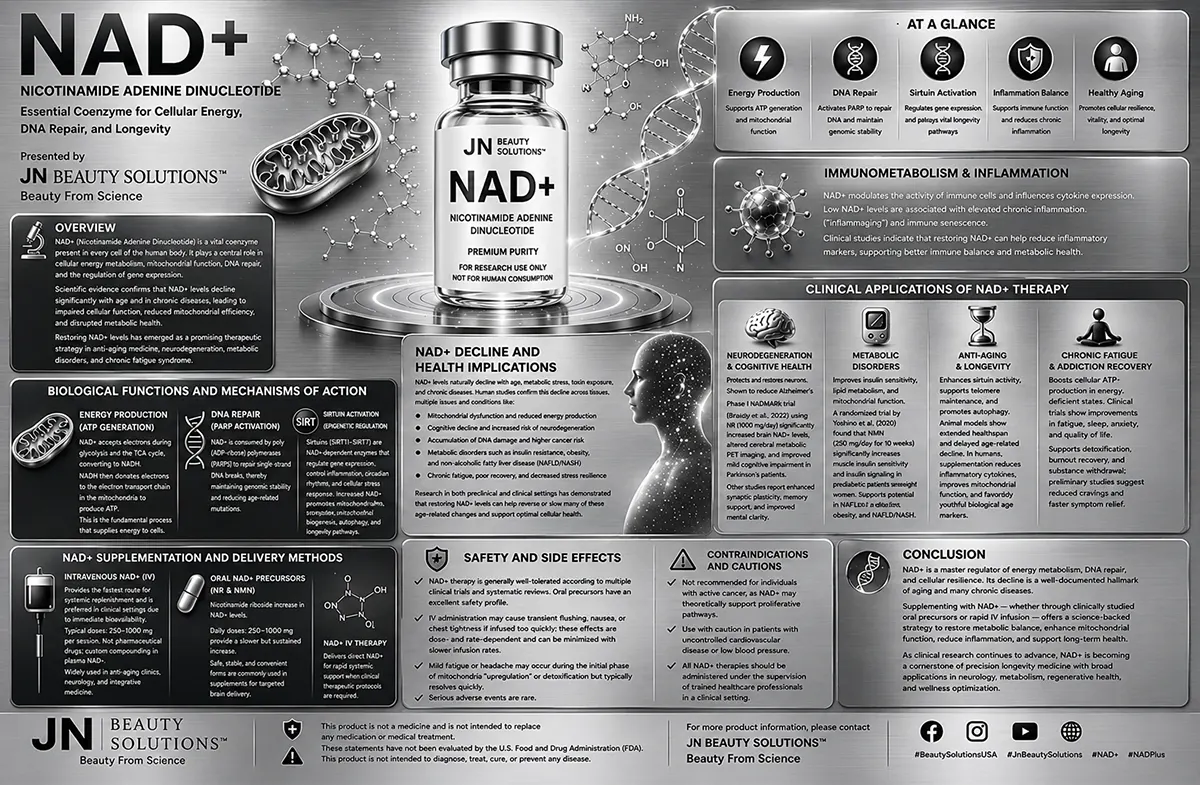
OVERVIEW NAD⁺ (Nicotinamide Adenine Dinucleotide) is a vital coenzyme present in every cell of the human body. It plays a central role in cellular energy metabolism, mitochondrial function, DNA repair, and the regulation of gene expression. As the oxidized form of NAD, NAD⁺ acts as an electron carrier in redox reactions that are essential for ATP production through oxidative phosphorylation and the Krebs (TCA) cycle. Scientific evidence confirms that NAD⁺ levels decline significantly with age and in chronic diseases,[...]
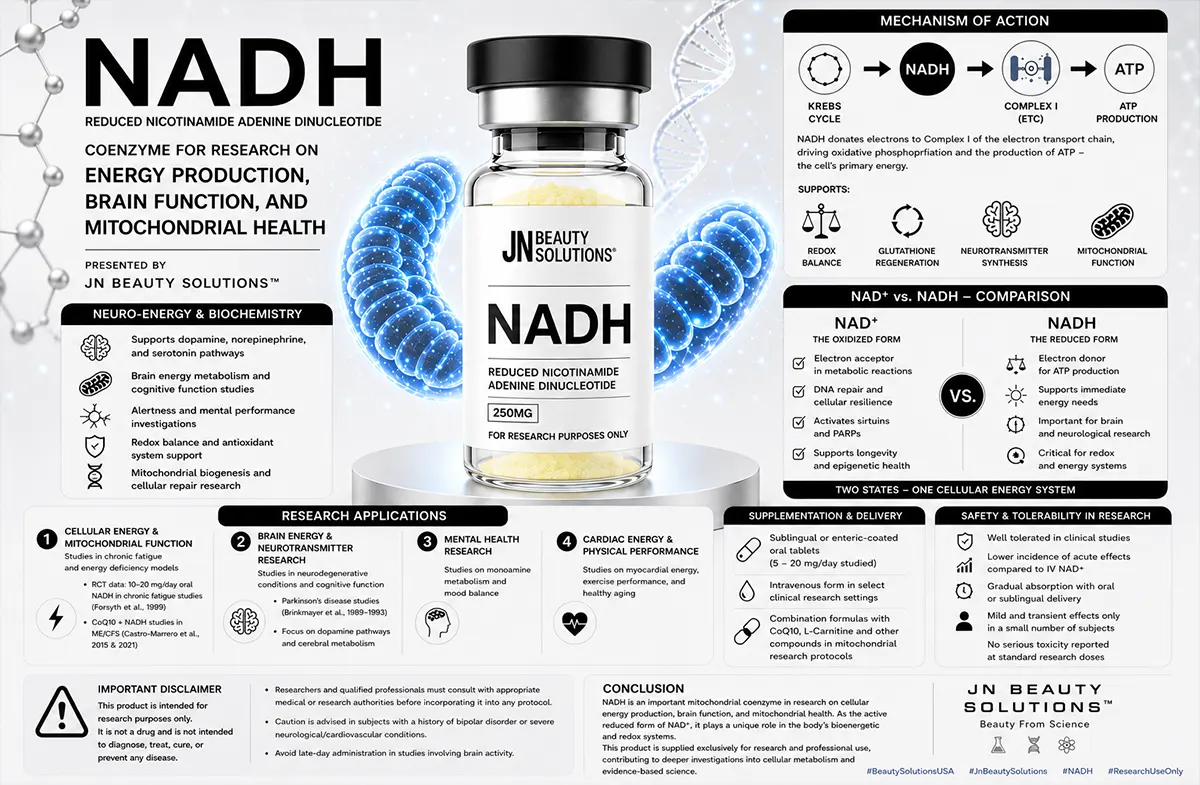
OVERVIEW NADH (Nicotinamide Adenine Dinucleotide – Reduced Form) is a biologically important coenzyme that plays an essential role in cellular energy production, particularly in high-energy-demand tissues such as the brain, heart, and muscles. As the electron-rich form of NAD⁺, NADH acts as an electron donor in metabolic reactions and participates directly in ATP synthesis within the mitochondria. NADH is involved in oxidative phosphorylation, neurotransmitter synthesis, and redox balance maintenance. It has been and continues to be studied in research[...]
Nicotinamide Adenine Dinucleotide (NAD)Admin2026-08-14T05:03:19-07:00