Kisspertin Peptide, also known scientifically as Kisspeptin (commonly in the forms of Kisspeptin-10 or Kisspeptin-54), is an important signaling peptide encoded by the KISS1 gene. Initially discovered as a metastasis suppressor (metastin), Kisspeptin rapidly became a prominent research focus due to its pivotal role in regulating the Hypothalamic-Pituitary-Gonadal (HPG) axis — the master control system of reproductive hormones.
STRUCTURE AND DETAILED MECHANISM OF ACTION
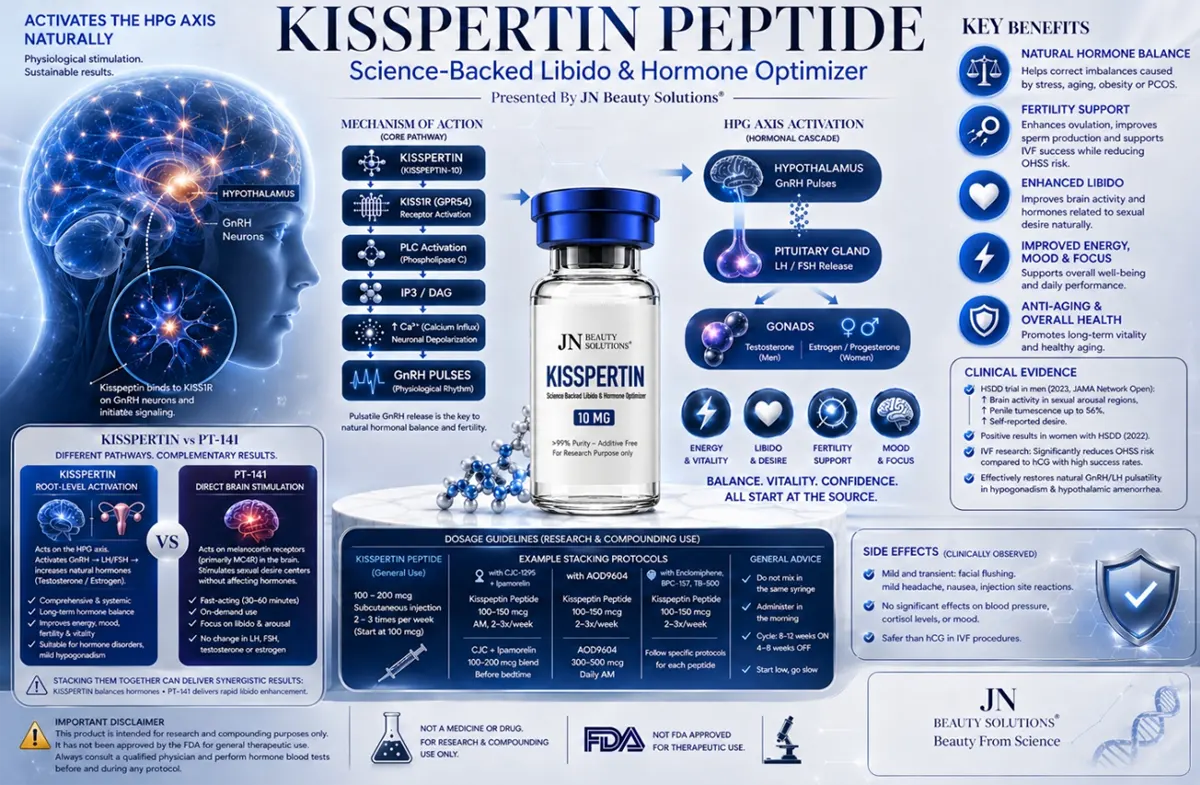
Kisspeptin belongs to a family of peptides (including Kisspeptin-54, -14, -13, and -10), of which Kisspeptin-10 is the shortest fragment but retains full biological activity. This peptide acts as a ligand for the KISS1R (GPR54) receptor — a G-protein coupled receptor (Gq/11) on the surface of GnRH neurons in the hypothalamus (Hypothalamus).
Core mechanism:
- Kisspeptin binds to KISS1R → activates intracellular signaling cascade: phospholipase C → IP3/DAG → increased intracellular Ca²⁺ → depolarization of GnRH neurons → pulsatile release of GnRH (rhythmic pulses).
- GnRH then stimulates the anterior pituitary gland to secrete LH and FSH.
- LH/FSH act on the gonads to produce testosterone (in men) or estrogen/progesterone (in women).
Kisspeptin also exerts direct effects on brain regions involved in sexual desire, helping to improve libido through natural hormonal and neurological mechanisms.
DIFFERENCE BETWEEN KISSPEPTIN AND PT-141
Both peptides are used to improve sexual desire (libido), but their mechanisms and effects are completely different:
- Kisspeptin: Acts on the reproductive hormone axis (HPG axis). It activates GnRH → LH/FSH → naturally increases testosterone/estrogen levels. Its effects are more comprehensive: improving baseline hormones, overall vitality, energy, mood, and fertility. Suitable for people with hormone disorders, mild hypogonadism, or those seeking long-term hormone balance.
- PT-141 (Bremelanotide): Acts directly on the brain via melanocortin receptors (primarily MC4R). It stimulates sexual desire centers in the brain (hypothalamus and limbic regions) without affecting hormone levels (LH, FSH, testosterone, or estrogen). Its effect is rapid (usually within 30–60 minutes after injection), focusing mainly on sexual desire and arousal. It is typically used on-demand for hypoactive sexual desire disorder (HSDD).
Summary Comparison:
- Kisspeptin = “Root-level activation” (natural hormones, systemic, long-term benefits).
- PT-141 = “Direct brain stimulation” (fast-acting, libido-specific, no hormone change).
Many users stack both peptides for synergistic effects: Kisspeptin balances baseline hormones + PT-141 provides rapid libido enhancement.
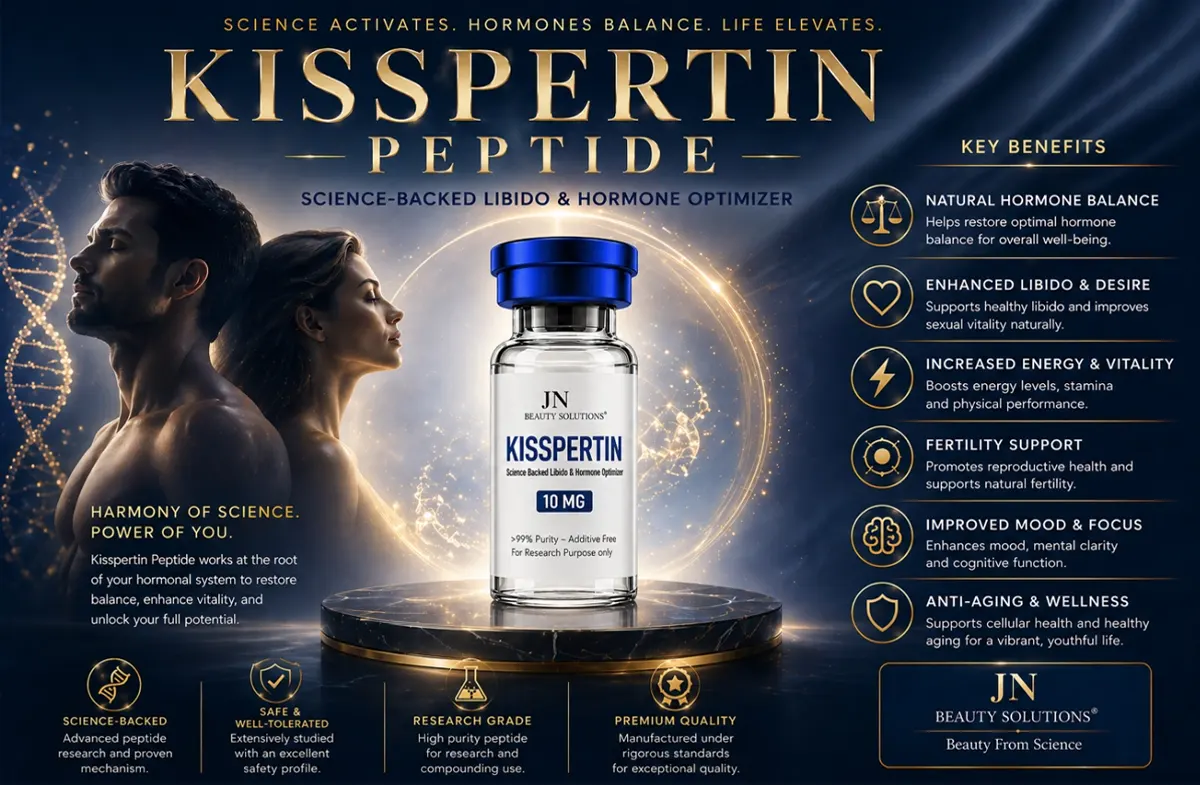
MAIN BENEFITS OF KISSPEPTIN
Based on clinical studies and peptide applications:
- Natural hormone balance: Helps correct hormone imbalances caused by stress, aging, obesity, or PCOS.
- Fertility support: Enhances ovulation, improves sperm production, and is safer in IVF procedures.
- Enhanced sexual desire: Improves brain activity and hormones related to libido.
- Improved energy, mood, and focus.
- Anti-aging and overall health support.
CLINICAL EVIDENCE AND KEY STUDIES
Kisspeptin has been extensively studied in numerous Phase 1–2 clinical trials:
- HSDD trial in men (2023, JAMA Network Open): Significantly increased brain activity in sexual arousal regions, improved penile tumescence by up to 56%, and enhanced self-reported desire.
- Similar positive results in women with HSDD (2022).
- IVF research: Markedly reduces the risk of OHSS compared to hCG, with high success rates.
- Patients with hypogonadism and hypothalamic amenorrhea: Effectively restores natural GnRH/LH pulsatility.
DOSAGE GUIDELINES (Based on Clinical Research and Compounding Use)
- Clinical research: IV bolus 0.3–10 nmol/kg or SC 6.4–12.8 nmol/kg (for IVF trigger).
- Compounding/research use: Kisspeptin-10 100–200 mcg injected subcutaneously 2–3 times per week (start at 100 mcg). Avoid continuous high doses to prevent receptor desensitization.
Specific Stacking Dosages
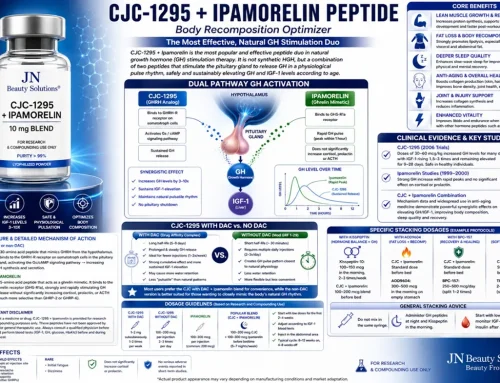
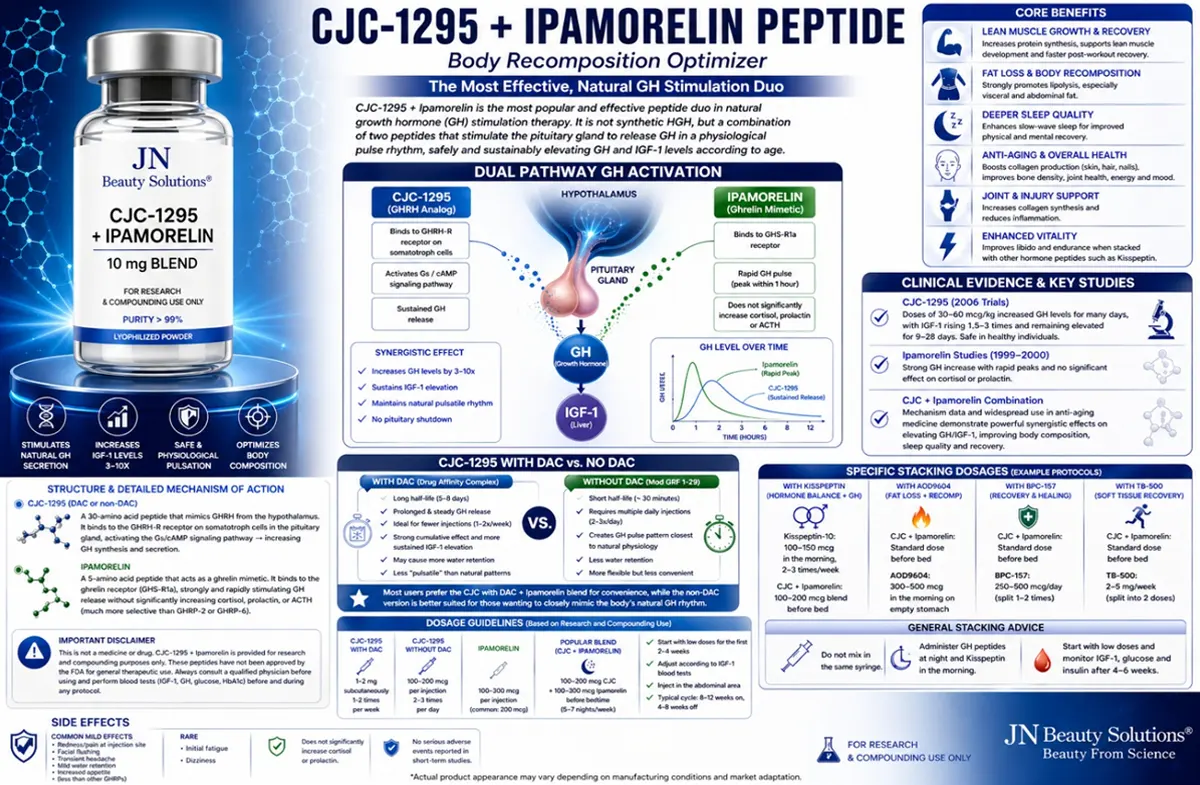
- With CJC-1295 + Ipamorelin: Kisspeptin-10: 100–150 mcg in the morning, 2–3 times/week. CJC + Ipamorelin: 100–200 mcg blend before bedtime.
- With AOD9604 (fat loss + hormone balance): Kisspeptin-10: 100–150 mcg, 2–3 times/week. AOD9604: 300–500 mcg daily in the morning.
- With Enclomiphene, BPC-157, TB-500: Similar dosages as mentioned in previous sections.
General advice: Do not mix in the same syringe. Administer Kisspeptin in the morning. Start with low dose. Typical cycle: 8–12 weeks on, 4–8 weeks off.
SIDE EFFECTS
Considered very safe in clinical studies:
- Mild and transient: facial flushing, mild headache, nausea, injection site reactions.
- No significant effects on blood pressure, cortisol levels, or mood.
- Safer than hCG in IVF procedures.
IMPORTANT DISCLAIMER: This is not a medicine or drug. Kisspeptin is provided for research and compounding purposes only. It has not been approved by the FDA for general therapeutic use. Always consult a qualified physician before use and perform hormone blood tests before and during any protocol.
CONCLUSION
Kisspeptin represents the smartest and most physiological approach in peptide hormone therapy — activating rather than replacing the body’s natural endocrine system.
Thanks to its distinctly different mechanism compared to PT-141, Kisspeptin is more suitable for those seeking comprehensive hormone balance, sustainable vitality, and fertility support.
When combined correctly with PT-141 or other peptides, you can achieve both foundational hormone benefits and optimal sexual desire.
For detailed product information, please contact:
JN Beauty Solutions®
Beauty From Science