OVERVIEW
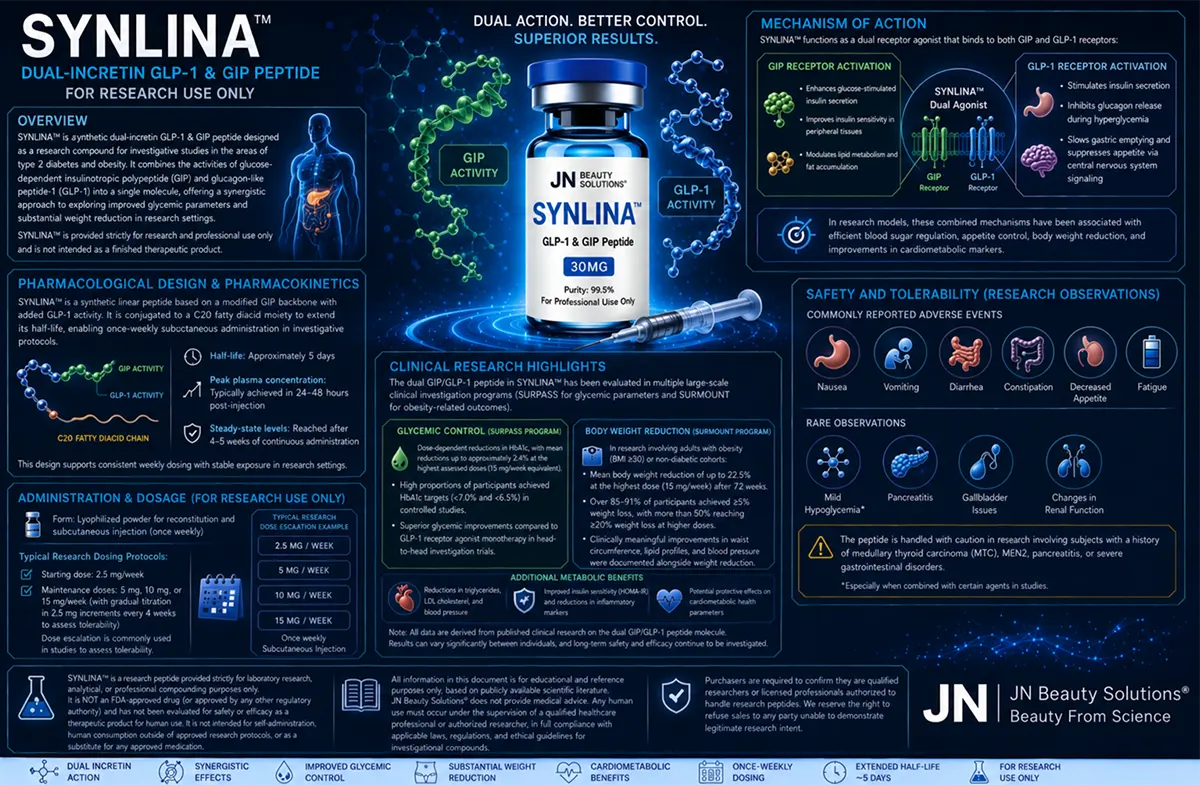
SYNLINA™ is a peptide formulation belonging to the dual incretin receptor agonist class (GLP-1 & GIP) — an advanced approach in research on weight management, metabolic optimization, and glycemic regulation.
The mechanism of SYNLINA™ is built upon biological principles that have been extensively studied within the dual incretin class, particularly tirzepatide — an active compound that has demonstrated superior efficacy in multiple large-scale Phase 3 clinical trials.
SYNLINA™ is designed to:
- Regulate the endogenous incretin system
- Restore metabolic balance
- Support sustainable weight loss through physiological mechanisms
Important note: All information below is based on published scientific research data regarding dual GLP-1/GIP agonists and is provided for research reference purposes only.
HISTORY OF INCRETIN RESEARCH
- 1960s–1970s: Discovery of the GIP hormone, initially known as Gastric Inhibitory Polypeptide
- 1980s: Identification of GLP-1 from the proglucagon gene
- 2005: The first GLP-1 RA was approved (exenatide)
- 2010–2021: Liraglutide and semaglutide demonstrated significant efficacy in weight reduction and glycemic control
- 2022: Tirzepatide became the first approved dual incretin agonist
This marked an important transition from mono-hormone therapy to multi-axis metabolic modulation. SYNLINA™ was developed according to this approach, optimizing the synergistic effects between GLP-1 and GIP.
MECHANISM OF ACTION
SYNLINA™ simultaneously acts on two primary receptors:
GLP-1 Receptor Activation
- Increases glucose-dependent insulin secretion
- Reduces glucagon secretion from the pancreas
- Slows gastric emptying
- Increases satiety through the hypothalamus
- Reduces “food noise” (central appetite signals)
GIP Receptor Modulation
- When combined with GLP-1, significantly improves insulin sensitivity
- Regulates lipid metabolism
- Enhances energy utilization in adipose and muscle tissues
Combined effects:
- Stabilizes blood glucose
- Reduces prolonged feelings of hunger
- Increases energy metabolism
- Reduces fat accumulation, particularly visceral fat
METABOLIC BENEFITS
Based on the mechanism of the dual incretin system, potential benefits observed in research include:
- Supports sustainable weight loss
- Improves glycemic control and reduces HbA1c
- Increases insulin sensitivity
- Reduces triglycerides and improves the blood lipid profile
- Supports the reduction of fatty liver disease (NAFLD)
- Improves satiety and eating behavior
- Potentially regulates inflammation and metabolic stress
Note: The benefits above are inferred from the mechanism of action and clinical data regarding dual incretin agonists. Specific results may vary depending on the individual and research conditions.
CLINICAL EVIDENCE REFERENCE
All data below are cited from clinical trials involving tirzepatide (dual GLP-1/GIP) for scientific reference purposes:
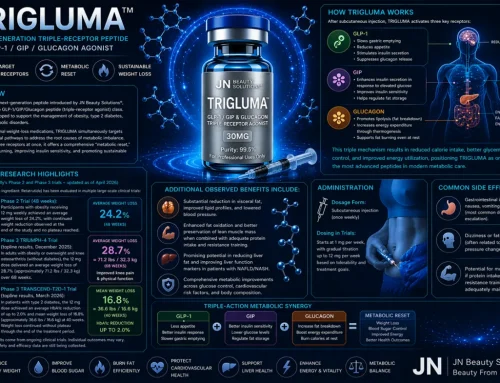
- SURMOUNT-1 (NEJM, 2022): 2,539 patients with obesity or overweight → Average weight reduction of 15.0%–20.9% after 72 weeks, depending on the dose.
- SURMOUNT-2 (The Lancet, 2023): Weight reduction of 13%–15.7% and HbA1c reduction of 2.0%–2.4%.
- SURMOUNT-5 (NEJM, 2025): Tirzepatide approximately 20.2% compared with semaglutide approximately 13.7%.
- SURPASS Trials (1–5): HbA1c reduction of 2.0%–2.3%, superior to insulin and GLP-1 monotherapy.
Scientific summary: Dual incretin agonists demonstrate superior efficacy compared with GLP-1 monotherapy across multiple metabolic pathways.
SAFETY PROFILE & RECOMMENDATIONS
Common adverse effects observed in research:
- Nausea and vomiting
- Diarrhea or constipation
- Temporary loss of appetite and mild fatigue
Characteristics: These effects are generally mild to moderate, occurring primarily during the first 4–8 weeks, particularly during the dose-escalation phase, and gradually decreasing over time. The discontinuation rate due to adverse effects was approximately 4%–7% in large clinical trials.
Contraindications based on research data:
- History of pancreatitis or acute pancreatitis
- Medullary thyroid carcinoma (MTC) or a family history of MEN2 syndrome
- Pregnant or breastfeeding women
- Severe and actively progressing gastrointestinal disorders
- Serious history of thyroid disorders or pancreatic conditions
Important safety recommendations:
- Always begin with the lowest dose to evaluate tolerance.
- Closely monitor blood glucose, thyroid indicators, and pancreatic function throughout the research process.
- Maintain an appropriate diet and exercise program to minimize adverse effects and optimize results.
- Discontinue immediately and consult a qualified professional if serious symptoms occur, such as severe abdominal pain or persistent vomiting.
- Concurrent use with medications that significantly affect blood glucose is not recommended without appropriate supervision.
Statement: All safety information is based on clinical data from the dual incretin class. SYLINA™ is intended for research purposes only.
CLINICAL USE & DOSAGE CONSIDERATIONS
SYNLINA™ is studied as a subcutaneous injection administered once weekly.
Reference dosage schedule from clinical trials:
- Weeks 1–4: 2.5 mg/week — Initial dose used to evaluate the body’s tolerance.
- Weeks 5–8: 5 mg/week — First dose escalation.
- Weeks 9–12: 7.5 mg/week — Second dose escalation.
- Weeks 13–16: 10 mg/week — Common maintenance dose.
- Week 17 onward: 12.5–15 mg/week — Optimal dose depending on response and research objectives.
- Reconstitution: Reconstitute with bacteriostatic water according to the manufacturer’s research procedures.
- Injection sites: Abdomen, thigh, or upper arm. Injection sites should be rotated each time to help prevent irritation.
- Injection timing: The injection may be administered on any day of the week. It is preferable to maintain the same day and time each week.
Important: The dosage schedule above is provided only as a reference based on clinical research. Dosage must be individualized according to research objectives, body weight, tolerance, and the subject’s metabolic condition. Do not adjust the dosage without appropriate guidance.
OPTIMIZATION STRATEGY
To optimize effectiveness and provide comprehensive support during research, SYNLINA™ may be combined with the following components:
Lifestyle Optimization: A high-protein diet providing 1.6–2.2 g of protein per kilogram of body weight, combined with resistance training 3–5 sessions per week. This helps preserve muscle mass, increase metabolism, and maintain long-term fat-loss results.
Metabolic Support by IV Therapy:
- NAD+ / NMN: Supports cellular energy, enhances DNA repair, and promotes healthy aging.
- L-Carnitine / MIC (Methionine-Inositol-Choline): Promotes fat metabolism, supports liver function, and increases energy expenditure.
- L-Arginine: Improves blood circulation and endothelial function.
- Thioctic Acid (Alpha-Lipoic Acid): Provides powerful antioxidant activity, supports glycemic control, and helps reduce inflammation.
Appetite Synergy & Peptide Synergy:
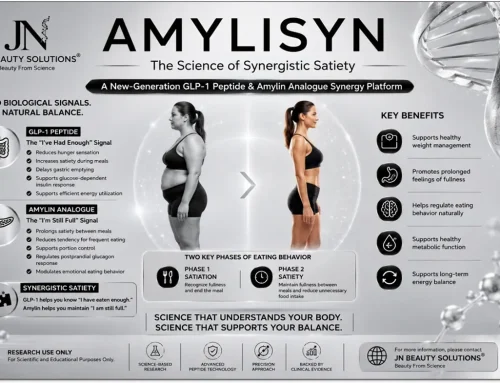
- Satylin (Amylin analogue): Enhances satiety, slows digestion, and provides strong synergy with GLP-1/GIP.
- Regenova: Supports regeneration and recovery.
- LipoCore: Supports lipid metabolism and localized fat reduction.
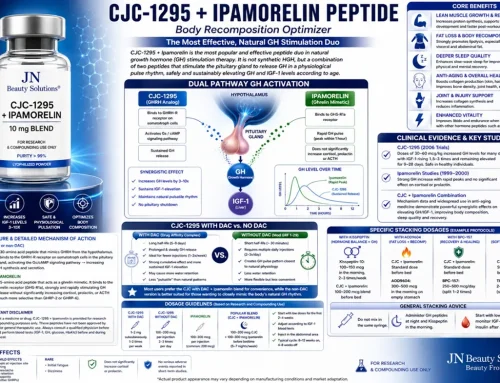
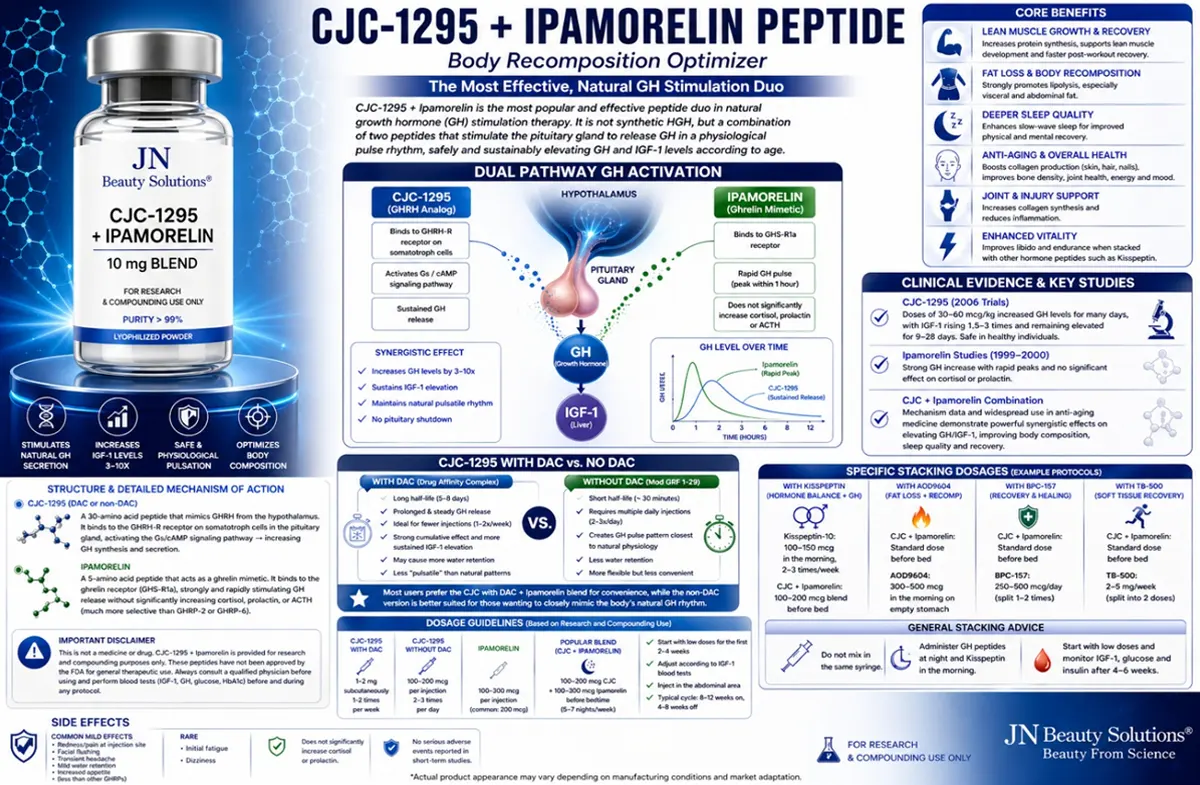
- CJC-1295 & Ipamorelin: Stimulates growth hormone (GH), helping preserve muscle mass and improve body composition during weight loss.
Combination notes: Protocols should be developed in stages and conducted under close supervision to achieve maximum effectiveness and ensure safety during research.
CONCLUSION
SYNLINA™ represents a modern approach to weight-management and metabolic research, based on the strong scientific foundation of the dual incretin system (GLP-1 & GIP).
Through its multi-axis regulatory mechanism, SYNLINA™ offers the potential to support effective weight reduction, improve metabolic health, and physiologically restore the body’s energy balance.
However, optimal effectiveness depends on an individualized research protocol, a scientifically structured lifestyle, and close monitoring.
Statement: SYNLINA™ is intended for research purposes only. It is not a therapeutic medication. All information is based on publicly available scientific data and is not a substitute for professional medical advice.
For more information or to inquire about SYNLINA, please contact:
JN Beauty Solutions®
Beauty From Science